2026
India
Today, 1.4 billion people wake up in a free country.
It wasn’t always this way.
But what did it take to get here?
2026
2000
1971
1947
1930
1919
1885
1857
1764
1757
The Company learned that Indian politics could be purchased. Revenue from Bengal would finance a far larger conquest.
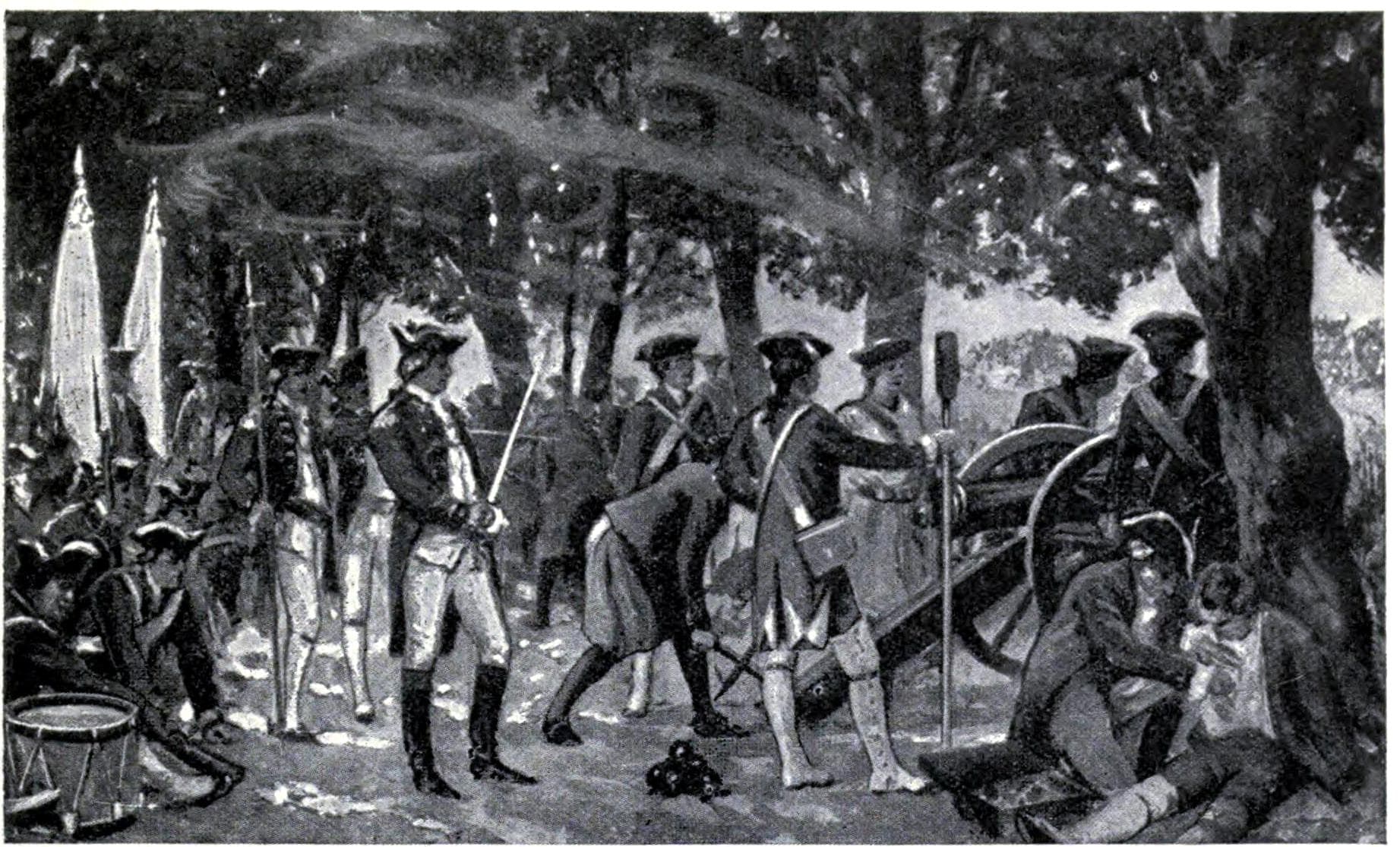
Battle of Plassey
It did not begin as a war for a continent. It began as a conspiracy over a province.
On 23 June 1757, Robert Clive’s East India Company force defeated Siraj-ud-Daulah, the Nawab of Bengal. The fighting itself was brief. The politics were not. Key commanders, including Mir Jafar, had already been turned. Bengal — then among the richest territories on earth — slipped toward Company control.
Plassey did not make Britain the ruler of India. It showed that a trading company could topple a government, collect a kingdom’s wealth, and stay.
Battle of Buxar
Plassey was a door. Buxar was the lock turning.
On 22 October 1764, Major Hector Munro’s Company army defeated a coalition of Mir Qasim of Bengal, Shuja-ud-Daula of Awadh, and the Mughal emperor Shah Alam II. The next year, the Treaty of Allahabad granted the Company the diwani — the right to collect revenue — in Bengal, Bihar, and Orissa.
The Mughal emperor remained a name. The Company became the state that counted the money.
Early resistance
Long before a national movement had a name, people were already refusing.
Sannyasi and Fakir rebellions
Bengal
Polygar resistance
Tamil country
Vellore Mutiny
Vellore
Paika Rebellion
Odisha
Santhal Hul
Rajmahal hills
Resistance did not begin in 1857, and it did not begin in English-educated drawing rooms. It was regional, religious, peasant, tribal, and military — often crushed, rarely forgotten.
1857
A spark.
Meerut
The garrison breaks.
Delhi
An emperor is proclaimed.
Kanpur
The river city rises.
Lucknow
Awadh does not yield easily.
Jhansi
A queen rides into the last battle.
The revolt was defeated.
The idea of resistance was not.
North India in revolt
On 29 March 1857, Mangal Pandey attacked British officers at Barrackpore. On 10 May, sepoys at Meerut killed their officers, freed imprisoned comrades, and marched to Delhi. The next day the aged Mughal emperor Bahadur Shah Zafar was proclaimed a sovereign again. The rising spread to Kanpur, Lucknow, Jhansi, and beyond. It was military mutiny, dynastic restoration, and popular revolt at once — and it was not everywhere. Large regions did not rise. Some princes fought for the Company.
1857 was the largest armed challenge to British power in India in the nineteenth century. It ended Company rule. It did not end the idea that British power could be broken.
Indian National Congress
After the guns failed, some Indians tried a room, a resolution, and a long argument.
On 28 December 1885, seventy-two delegates met in Bombay and founded the Indian National Congress. Allan Octavian Hume, a retired British civil servant, helped convene it. Womesh Chunder Bonnerjee presided. Early Congress was moderate, elite, and loyal in language. It asked for representation, civil service access, and reform — not, at first, for the end of empire.
A permanent all-India political platform now existed. Over decades it would become something its first meeting could not yet imagine.
The idea of a nation
Some counted the money leaving India. Some named a right that could not be petitioned away.
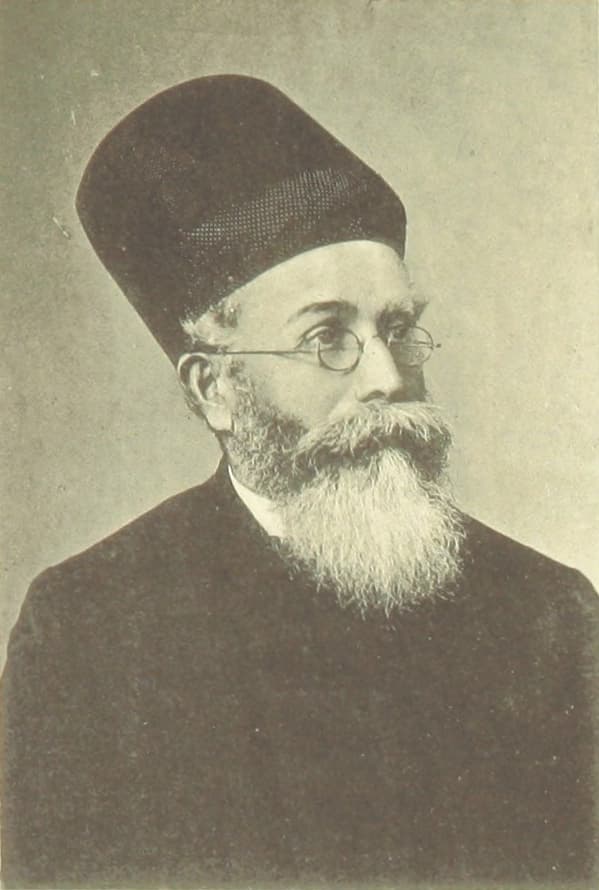
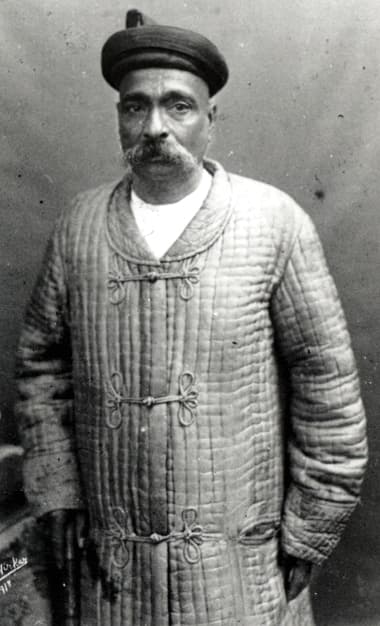
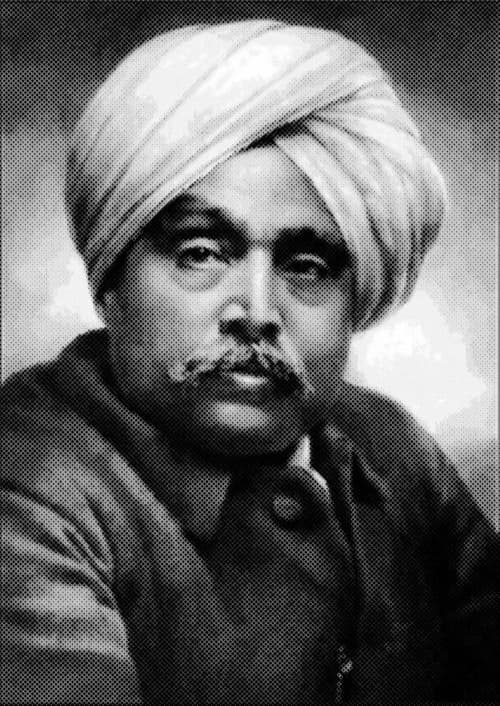
Dadabhai Naoroji argued that British rule was draining India’s wealth. Gopal Krishna Gokhale pressed for constitutional reform. Bal Gangadhar Tilak, Bipin Chandra Pal, and Lala Lajpat Rai demanded a harder politics — swadeshi, boycott, swaraj. The Congress contained both tempers: petition and pressure, patience and impatience.
“Swaraj is my birthright and I shall have it.”
Bengal is divided.
Swadeshi
In 1905 the government divided Bengal. India answered by refusing to buy the empire’s cloth.
Swadeshi took nationalism out of conference halls and into markets, schools, and streets.
Other methods
While some petitioned and some boycotted, others chose the underground.
- Aurobindo GhoseEarly revolutionary thinker in Bengal
- Khudiram BoseExecuted in 1908, aged eighteen
- Ram Prasad BismilKakori case; hanged 1927
- Ashfaqulla KhanKakori case; hanged 1927
- Chandrashekhar AzadHSRA leader; died in a police encounter, 1931
Independence was argued in more than one moral language: non-violence, constitutionalism, and revolutionary force.
Gandhi returns
A lawyer who had learned satyagraha in South Africa stepped onto an Indian dock and changed the scale of politics.
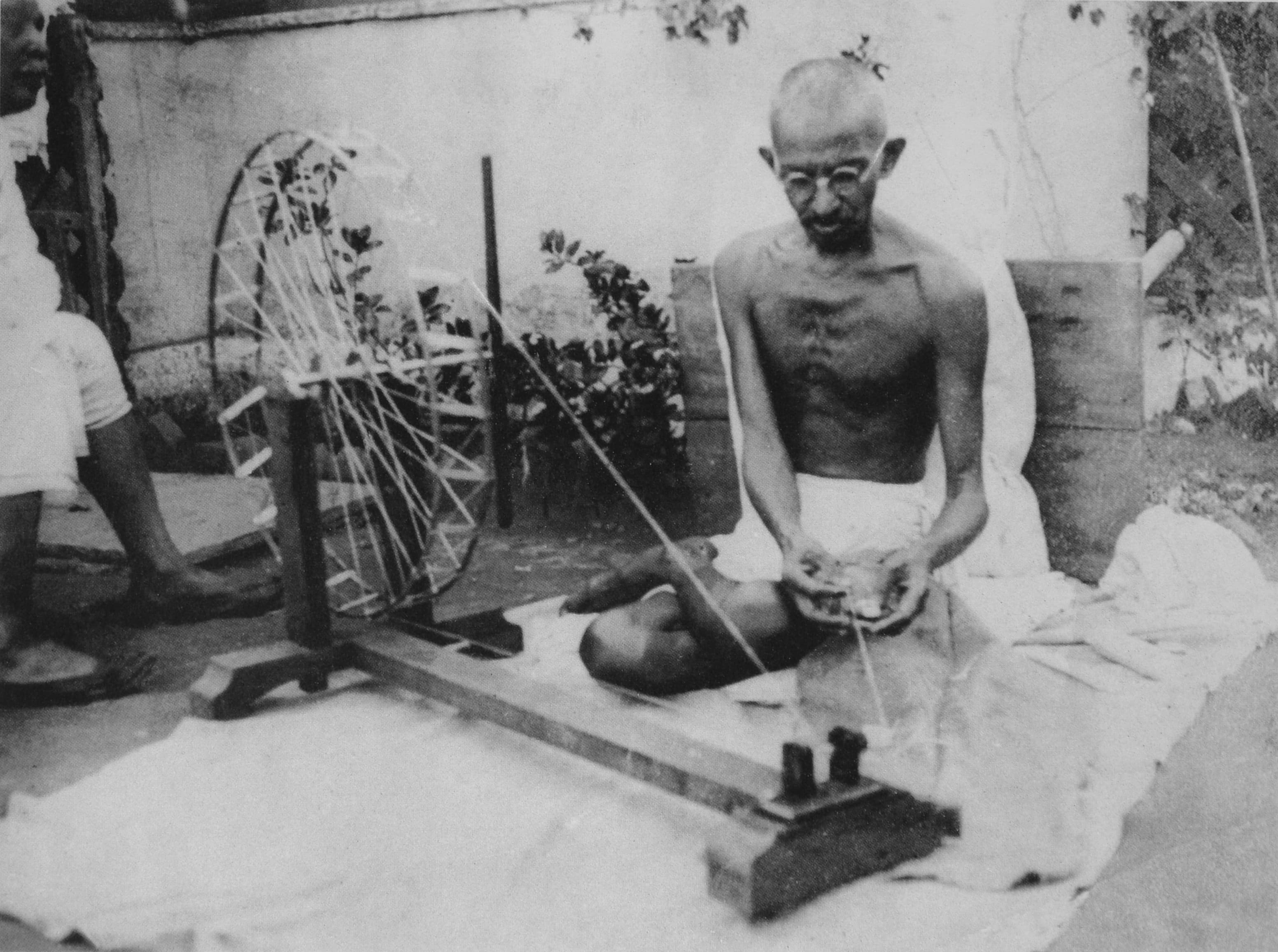
Mohandas Karamchand Gandhi landed in India on 9 January 1915, after more than two decades in South Africa. He listened first. Then he tested satyagraha on Indian ground: indigo cultivators in Champaran (1917), peasants in Kheda (1918), mill workers in Ahmedabad (1918). The method was disciplined non-violence. The ambition was to make ordinary people the movement.
The Rowlatt Act
The war ended. The emergency laws did not.
In March 1919 the Imperial Legislative Council passed the Anarchical and Revolutionary Crimes Act — the Rowlatt Act — allowing detention without trial. Indian members of the council opposed it. The government passed it anyway. Gandhi called for a nationwide hartal. Punjab, already tense, tightened into something worse.
Protest became general. In Amritsar, it became a crime to assemble. Then a garden filled.
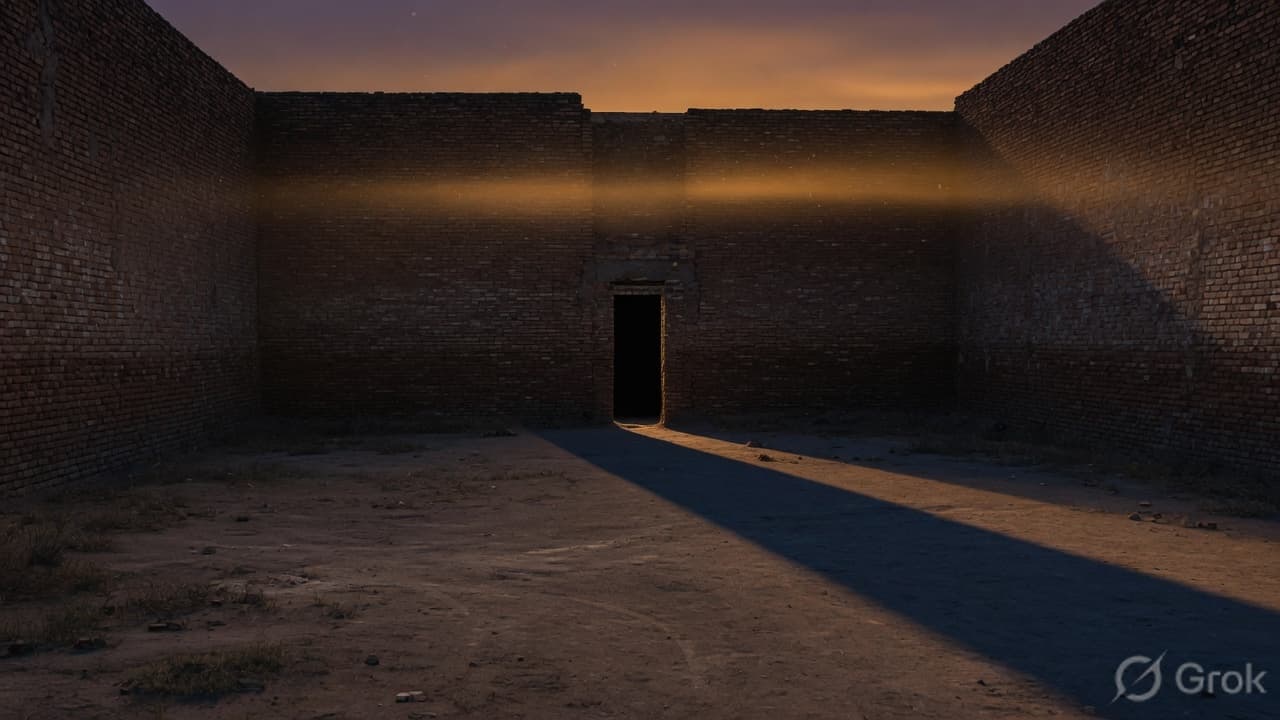
Jallianwala Bagh
A garden. Almost no way out.
Official British figures later counted 379 dead. An Indian inquiry estimated around a thousand. The numbers still do not agree. The silence after the rifles does.
The massacre changed India.
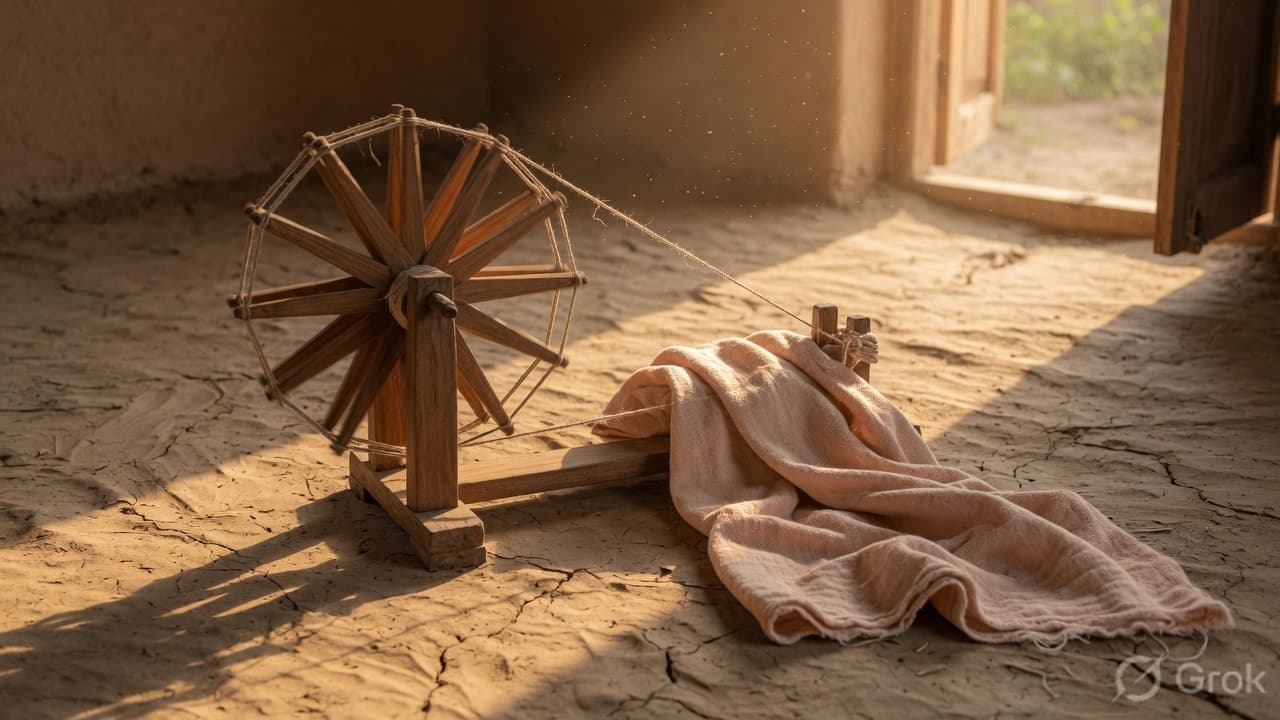
Non-Cooperation
If the government would not be just, people would stop helping it function.
Gandhi and the Congress launched non-cooperation in 1920, joining it to the Khilafat agitation. Indians were asked to boycott government schools, courts, titles, and foreign cloth; to take up khadi; to refuse to make colonial life run smoothly. The movement became massive. In February 1922, a crowd at Chauri Chaura killed policemen. Gandhi suspended the campaign. Many younger nationalists never fully forgave the halt.

Sabarmati Ashram
He left with seventy-eight people.
1 person
10 people
100 people
1,000 people
thousands of people
Dandi
Salt became a weapon.
A tax on the sea
On 12 March 1930, Gandhi walked out of Sabarmati Ashram toward the sea. Twenty-four days and about 240 miles later, on 6 April at Dandi, he lifted illicit salt and broke the law. The salt tax was small in money and large in meaning: the state claimed even the ocean’s crust. Civil disobedience spread — raids on salt depots, boycotts, arrests by the tens of thousands, including Gandhi.
A humble mineral made imperial law look absurd. The world press understood the picture. So did villagers who had never read a resolution.
Salt was the opening sentence. Arrests were the paragraph that followed.
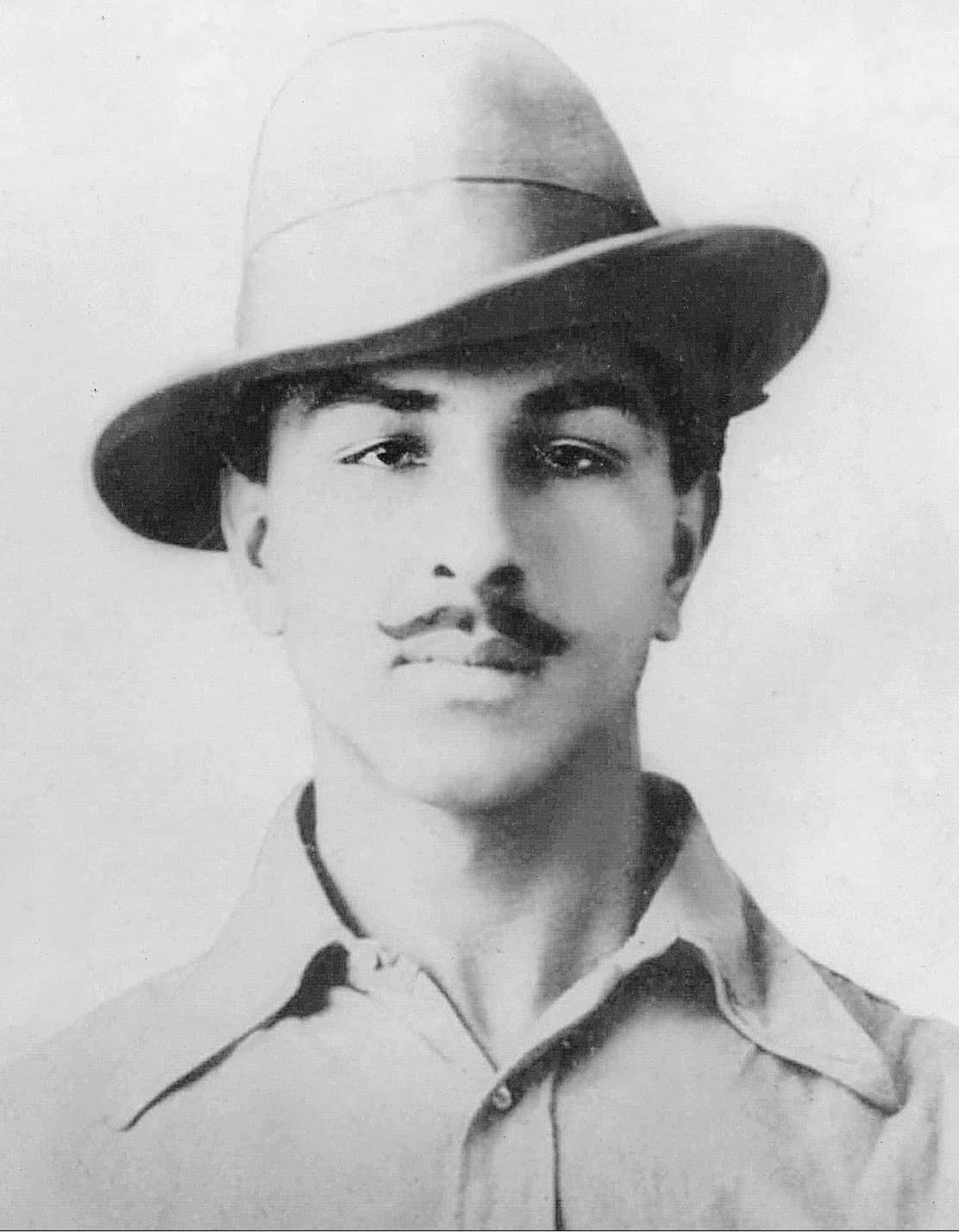
Bhagat Singh
He was twenty-three. The country learned his name before it finished learning his argument.
Bhagat Singh, a socialist revolutionary of the HSRA, helped kill British police officer J. P. Saunders in 1928 in retaliation for the death of Lala Lajpat Rai. On 8 April 1929 he and Batukeshwar Dutt threw bombs in the Central Legislative Assembly — chosen, they said, to be heard, not to kill. They were arrested by design. On 23 March 1931, Bhagat Singh, Shivaram Rajguru, and Sukhdev Thapar were hanged in Lahore Central Jail.
A young man turned the courtroom and the gallows into a national stage. His popularity did not cancel Gandhi’s method. It proved the movement had more than one pulse.
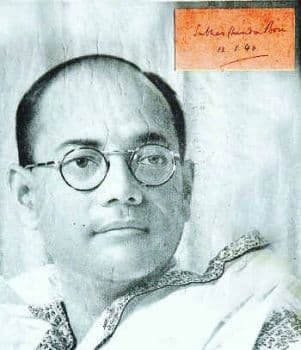
Subhas Chandra Bose
Indian National Army
He left the Congress, then the country, and tried to fight the empire with an army of prisoners and exiles.
Subhas Chandra Bose, twice Congress president, broke with Gandhi over method and urgency. He escaped house arrest in 1941. In Southeast Asia he took over and recast the Indian National Army, formed first under Mohan Singh from Indian prisoners of war. On 21 October 1943 in Singapore he proclaimed the Provisional Government of Free India — Azad Hind. INA units fought with Japanese forces toward India. They did not break through at Imphal and Kohima in 1944. Bose died in a reported air crash in Taipei in August 1945.
“Give me blood, and I shall give you freedom!”
Quit
India
After the failure of the Cripps Mission, the All India Congress Committee met at Gowalia Tank, Bombay, on 8 August 1942. Gandhi offered a mantra: Do or Die. By morning the leadership was in prison. The movement went on without them — strikes, protests, sabotage of communications, underground Congress radio. The repression was severe. The slogan “Quit India” had been coined by Yusuf Meherally.
“The mantra is ‘Do or Die’. We shall either free India or die in the attempt; we shall not live to see the perpetuation of our slavery.”
The empire is beginning to crack.
The endgame
No single blow ended the Raj. A set of them made the old machinery impossible.
The war ends. Britain is exhausted.
INA officers are tried. The country defends them.
The Royal Indian Navy mutinies in Bombay.
A last attempt at a united settlement fails.
Direct Action Day. The streets become a warning.
An empire survives on obedience, especially in its own armed forces. That obedience was no longer reliable. Nor was a single Indian political will.
1947
March
April
May
June
July
August
Partition
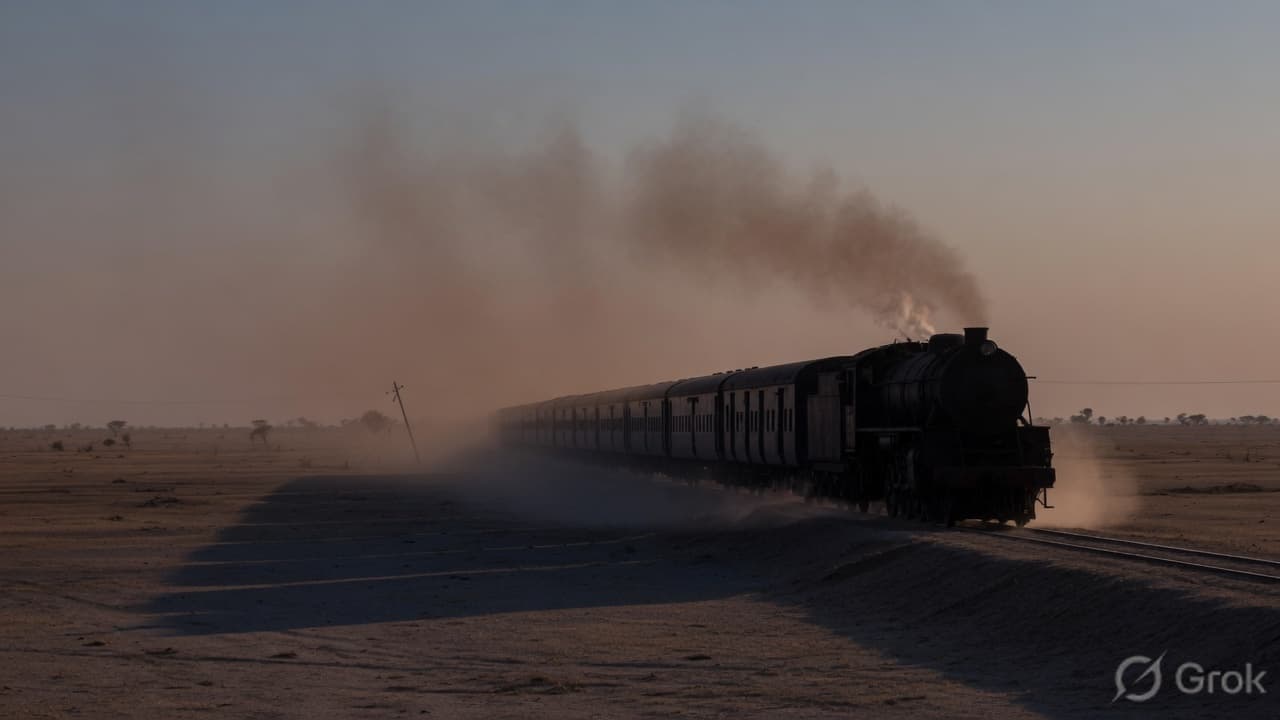
Trains that should have carried ordinary passengers carried entire lives. Some did not arrive.
The Partition of British India created India and Pakistan. Around fourteen to fifteen million people were displaced in one of the largest migrations in history. Estimates of those killed range from several hundred thousand to as high as two million; scholars do not agree on a single number, and they should not pretend to. Women were abducted. Neighbours became enemies. The violence was communal, intimate, and often neighbourly — which is a harder sentence than any battlefield report.
Freedom arrived with an enormous human cost.

India is free.
For the first time in generations, India could determine its own future.
“At the stroke of the midnight hour, when the world sleeps, India will awake to life and freedom.”
What does freedom mean?
Independence wasn’t only won by leaders.
It was inherited by millions of ordinary people.
You were born into something generations fought to create.
Freedom feels ordinary…
…until you remember it wasn’t.
80 years.
A country still becoming what its freedom promised.
What will your generation do with it?
Happy Independence Day, India